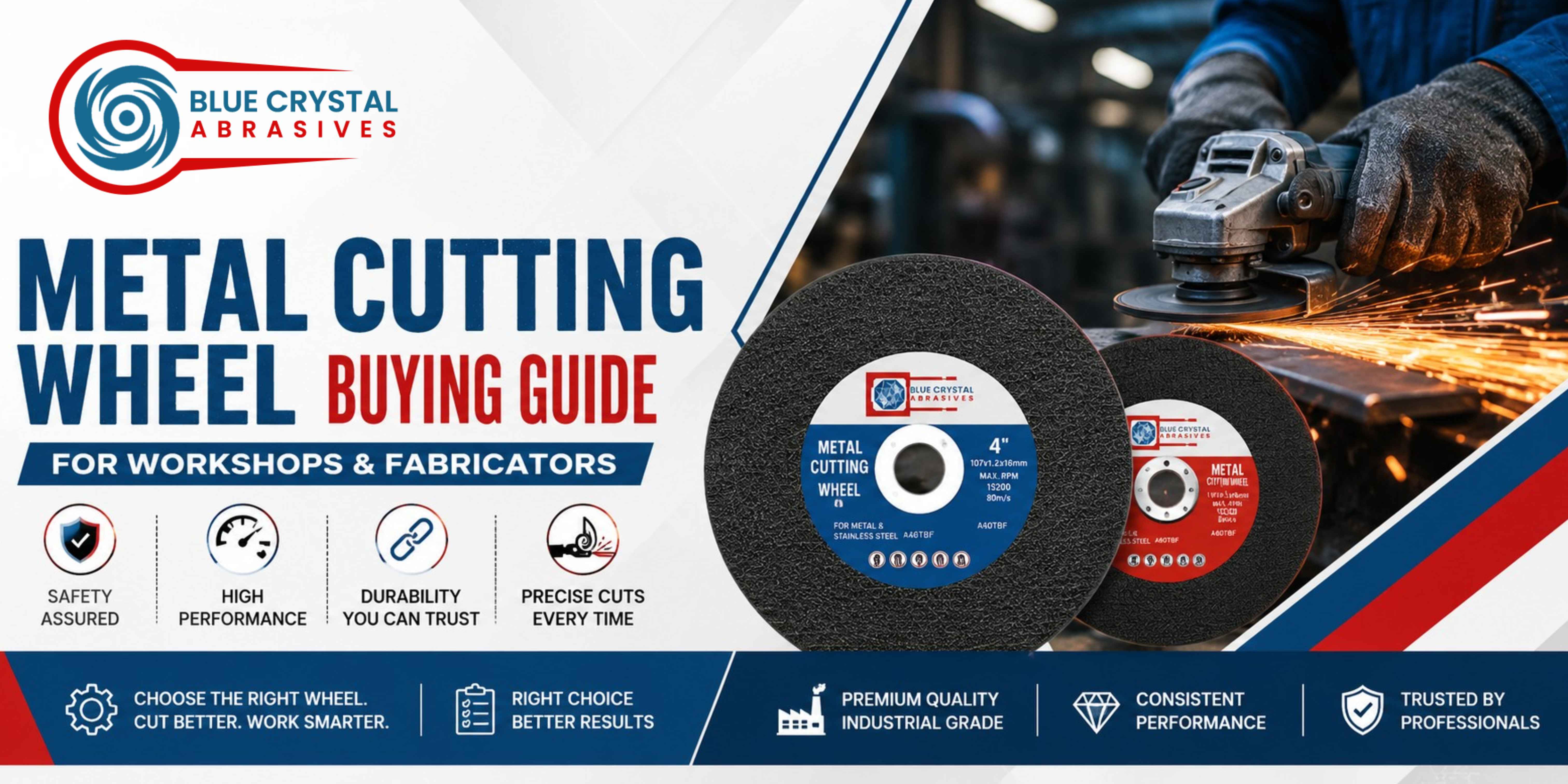
Whether you're cutting mild steel, stainless steel, pipes, bars, sheets, or structural metal, selecting the right cutting wheel directly affects productivity, safety, and finishing quality. A poor-quality wheel can wear out quickly, increase downtime, and even create safety risks. This comprehensive guide explains everything workshops and fabricators should know before purchasing a Metal Cutting Wheel. If you're sourcing from a trusted Abrasive Cutting Wheel Manufacturer, understanding the key buying factors will help you choose a product that delivers consistent performance and long service life.
A cutting wheel is more than just an accessory for an angle grinder. It determines:
Professional fabrication workshops rely on quality cutting wheels to reduce production costs while maintaining precision. Investing in the right wheel minimizes wheel replacements, improves operator confidence, and increases productivity.
A metal cutting wheel is a resin-bonded abrasive disc designed to cut various ferrous and non-ferrous metals. It is manufactured using high-quality abrasive grains bonded together with reinforced fiberglass mesh to provide strength during high-speed operations.
Modern cutting wheels are engineered for:
Metal cutting wheels are essential in numerous industries, including:
Each industry requires wheels designed for specific applications and workloads.
Choosing the correct wheel begins with understanding the available options.
Suitable for general-purpose cutting of steel and metal components.
Ideal for:
These wheels produce faster cuts with less material loss and lower heat generation.
Advantages include:
Designed for demanding industrial applications involving thick metal sections and continuous operation.
Best suited for:
Different wheels are engineered for particular materials, such as the Stainless Steel Cutting Wheel, which minimizes contamination and delivers clean cuts without affecting corrosion resistance.
Always match the cutting wheel with the material being processed.
Examples include:
Using the wrong wheel can reduce efficiency and increase wear.
Wheel thickness impacts cutting performance.
Thin wheels:
Thicker wheels:
Choose the diameter according to your machine.
Popular sizes include:
The widely used 4 Inch Cutting Wheel is ideal for handheld angle grinders and routine workshop applications.
Never exceed the wheel's rated operating speed.
Always verify:
Matching both ensures safe operation.
Premium cutting wheels use double fiberglass reinforcement for added strength, reducing the risk of breakage during high-speed cutting.
Most industrial cutting wheels today use resin bonding because it offers:
A reputed Resin Bonded Cutting Wheel Manufacturer follows strict manufacturing processes to ensure uniform bonding, resulting in reliable performance even under demanding conditions.
Fabricators frequently ask how to select the best cutting wheel for mild steel.
Key features include:
A quality wheel produces clean cuts while minimizing material loss.
Even the best cutting wheel requires proper handling.
Always:
Proper storage prevents moisture absorption and extends wheel life.
Watch for these warning signs:
If these issues occur regularly, consider switching to a higher-quality wheel.
Many workshops unknowingly reduce productivity by:
Instead, evaluate overall value, safety certifications, consistency, and technical support.
The manufacturing process significantly affects wheel performance.
A reliable abrasive cutting wheel manufacturer invests in:
This ensures every wheel performs consistently across production batches.
Before selecting a supplier, evaluate:
Businesses often prefer working with a trusted Industrial Abrasives Manufacturer because they offer application-specific recommendations and consistent product quality.
Many distributors and industrial brands source products from an OEM Cutting Wheel Manufacturer to deliver customized specifications, private labeling, and consistent quality while maintaining competitive pricing.
OEM solutions are especially valuable for businesses seeking branded products without investing in manufacturing infrastructure.
To improve wheel performance:
These simple practices improve productivity while reducing operating costs.
Blue Crystal Abrasives manufactures high-performance cutting wheels engineered for demanding industrial applications. With a strong focus on quality, safety, and consistency, the company offers products suitable for fabrication workshops, engineering industries, metalworking units, and industrial manufacturers.
Whether you require standard cutting wheels, customized solutions, or bulk industrial supplies, the company emphasizes precision manufacturing, rigorous quality control, and reliable product performance to help customers achieve efficient and safe cutting operations.
Selecting the right Metal Cutting Wheel is an investment in productivity, safety, and long-term operational efficiency. By considering material compatibility, wheel thickness, RPM rating, reinforcement quality, and manufacturer credibility, workshops and fabricators can significantly improve cutting performance while reducing costs. Partnering with a dependable Abrasive Cutting Wheel Manufacturer ensures access to high-quality products backed by consistent manufacturing standards, making every cut faster, cleaner, and more reliable.
Select a wheel based on the material being cut, wheel thickness, grinder size, RPM compatibility, and application requirements.
Many general-purpose wheels cut multiple metals, but specialized wheels provide better performance for specific materials like stainless steel or hardened alloys.
Thin wheels remove less material during cutting, generating lower friction and heat while providing faster, cleaner cuts.
Replace a cutting wheel when it becomes excessively worn, damaged, cracked, or no longer delivers efficient cutting performance.
Always wear appropriate personal protective equipment, inspect the wheel before use, verify RPM compatibility, and operate according to the manufacturer's safety instructions.
A reputable manufacturer ensures consistent product quality, better safety standards, longer wheel life, and reliable cutting performance through stringent quality control processes.
