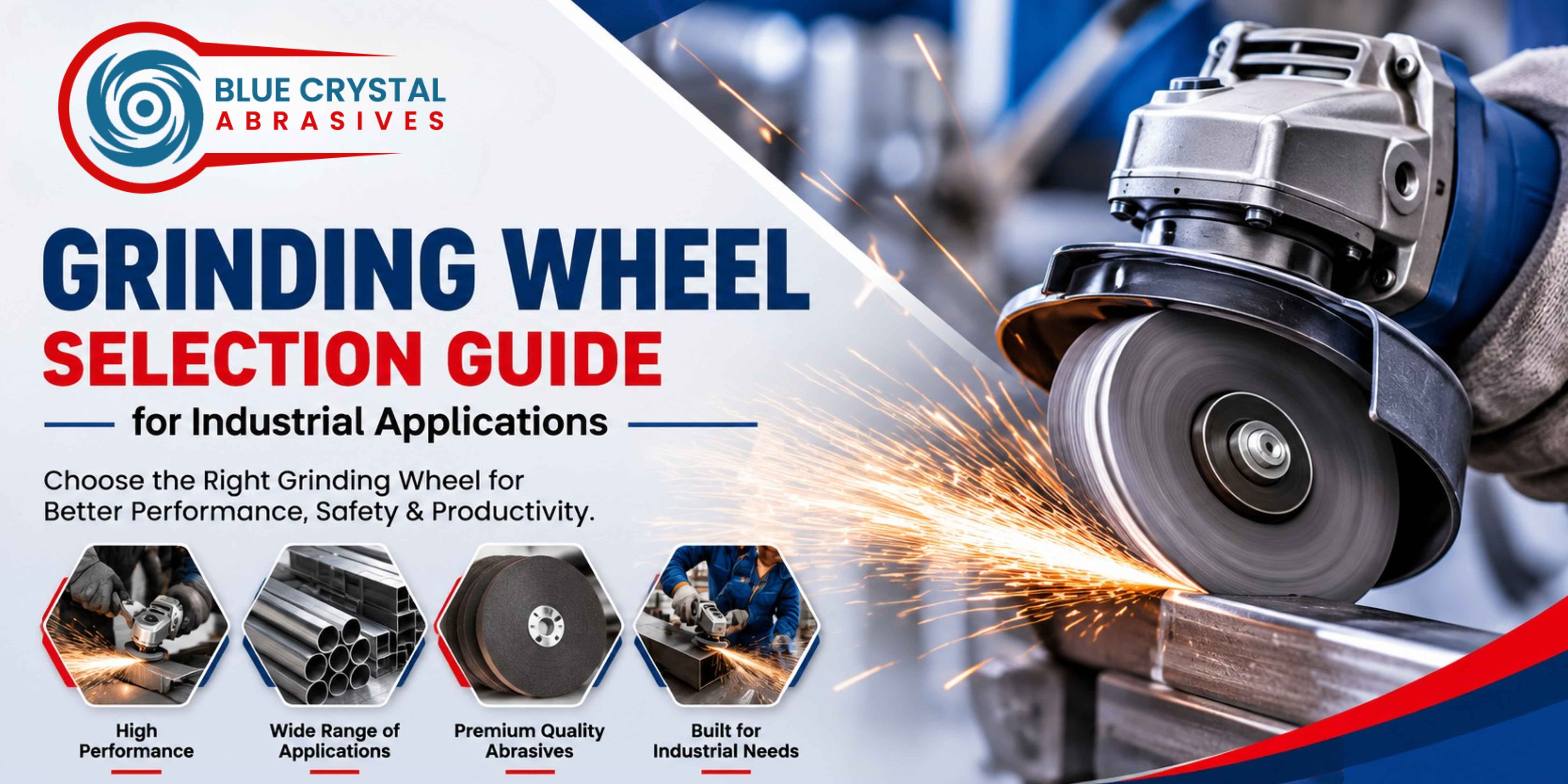
Selecting the right grinding wheel is one of the most important decisions in any industrial manufacturing, fabrication, or metalworking process. Whether you work with stainless steel, mild steel, cast iron, or specialty alloys, choosing the correct wheel directly impacts productivity, finish quality, safety, and operational costs. A trusted Industrial Abrasives Manufacturer and Cutting Wheel Manufacturer India understands that every application requires a specific grinding solution, making wheel selection a critical factor for achieving consistent industrial performance.
Grinding wheels are precision-engineered abrasive tools designed to remove material, smooth surfaces, sharpen tools, and prepare components for finishing operations. However, using the wrong grinding wheel can lead to:
The right grinding wheel not only improves productivity but also ensures operator safety and consistent output.
A grinding wheel consists of abrasive grains bonded together using specialized bonding materials. During operation, the abrasive particles remove small amounts of material while maintaining dimensional accuracy.
The overall performance depends on several factors including:
Every industrial application requires a different combination of these characteristics.
The first consideration should always be the workpiece material.
Different materials require different abrasive characteristics.
For example:
Harder materials generally require softer grinding wheels, while softer metals often perform better with harder wheels.
Industrial applications involve different grinding methods, including:
Each process demands a wheel designed specifically for that application.
Grain size determines how aggressively a wheel removes material.
Ideal for:
Suitable for:
Recommended for:
Choosing the correct grain size balances speed with finish quality.
Wheel hardness refers to how firmly abrasive grains are held by the bond—not the hardness of the abrasive itself.
General guideline:
Proper hardness improves wheel life while reducing loading and glazing.
Bonding material significantly affects wheel performance.
Popular bond types include:
Industrial fabrication often relies on products developed by a trusted Resin Bonded Cutting Wheel Manufacturer because resin bonds provide excellent cutting speed, flexibility, and durability.
Wheel size influences grinding efficiency and accessibility.
Common industrial sizes include:
A 4 Inch Cutting Wheel remains one of the most widely used options for fabrication shops due to its versatility and compatibility with handheld angle grinders.
Understanding wheel types helps industries select the right solution.
Used for:
Best suited for:
Ideal for:
Primarily used in industrial grinding machines for high-precision work.
Recommended for:
Different abrasive materials offer unique advantages.
Perfect for:
Best for:
Ideal for:
Excellent for:
Many industries lose productivity because of improper wheel selection.
Avoid these mistakes:
Correct wheel selection saves money over time.
Safety should always remain a top priority.
Always:
Proper handling extends wheel life while protecting operators.
Grinding wheels are used extensively in:
Grinding and finishing structural steel, pipes, and fabricated components often require a high-quality Metal Cutting Wheel to achieve clean, accurate results.
Grinding stainless steel requires specialized abrasives to avoid contamination and discoloration. A dedicated Stainless Steel Cutting Wheel delivers cleaner cuts while maintaining corrosion resistance.
Grinding heavy machinery components, weld joints, and repair work.
Surface preparation and weld finishing.
Precision grinding of high-performance alloys.
General-purpose grinding and maintenance operations.
Industrial users often focus only on price, but premium grinding wheels provide long-term value through:
Investing in quality abrasives lowers the total cost per cut or grind.
Working with an experienced manufacturer offers advantages beyond the product itself.
Reliable manufacturers provide:
Many industries also prefer partnering with an OEM Cutting Wheel Manufacturer for customized abrasive solutions tailored to their machinery, branding, and production requirements.
Blue Crystal Abrasives is committed to delivering high-performance abrasive solutions for diverse industrial applications. With modern manufacturing processes, stringent quality standards, and continuous product innovation, the company supplies grinding and cutting wheels designed for efficiency, durability, and operator safety.
Whether your business requires wheels for fabrication, engineering, automotive manufacturing, or heavy industrial applications, choosing products from an experienced Abrasive Cutting Wheel Manufacturer ensures consistent performance and long-term value. Businesses looking for precision solutions can also benefit from products developed by a trusted Thin Cutting Wheel Manufacturer, especially for applications requiring clean, burr-free cuts.
To improve wheel performance:
Following these practices helps reduce operational costs while improving productivity.
Choosing the correct grinding wheel is not simply about selecting an abrasive—it is about improving efficiency, maintaining safety, reducing costs, and achieving superior results. Factors such as workpiece material, grain size, bond type, wheel hardness, operating speed, and application all play a vital role in making the right choice. Partnering with a reliable Industrial Abrasives Manufacturer and Cutting Wheel Manufacturer India ensures access to high-quality grinding solutions backed by technical expertise, helping industries achieve better performance, longer wheel life, and consistent production quality.
Consider the material being ground, the type of grinding operation, wheel size, grain size, bond type, and machine speed before selecting a grinding wheel.
A grinding wheel specifically designed for stainless steel helps prevent contamination, reduces heat generation, and provides a cleaner finish.
Coarse grain wheels remove material quickly for rough grinding, while fine grain wheels produce smoother finishes for precision applications.
The wheel's maximum RPM rating must always match or exceed the machine's operating speed to ensure safe operation and prevent wheel failure.
The lifespan depends on the wheel quality, material being ground, operating pressure, grinding technique, and storage conditions.
No. Different metals require different abrasive materials and wheel specifications for optimal performance and safety.
Resin bonded grinding wheels are widely used for high-speed cutting and grinding applications because they offer excellent durability, flexibility, and cutting efficiency.
Reputed manufacturers offer consistent quality, better safety standards, technical support, certified products, and reliable performance, helping reduce downtime and overall operating costs.
